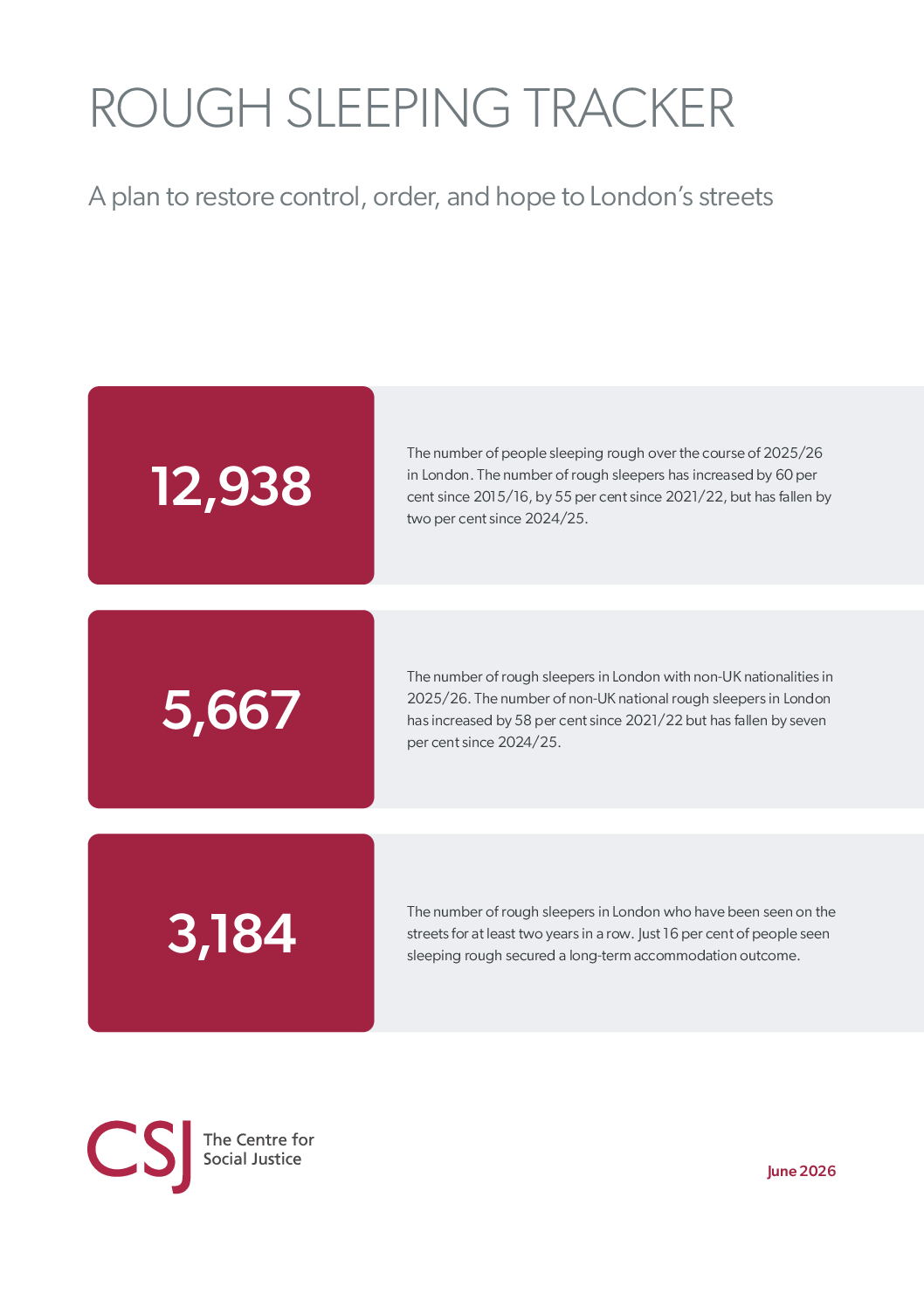
Rough sleeping is falling in London but remains at a near record high.
12,938 people were subject to a night on the streets in 2025/26, a two per cent fall since 2024/25. The number of people seen sleeping rough in London is still 60 per cent higher than in 2015/16, and 55 per cent higher compared to 2021/22.
While overall numbers have fallen, there is a growing proportion of long-term rough sleepers trapped on the capital’s streets. One in four (25 per cent) rough sleepers have been seen for at least two years in a row, compared to just one in five (20 per cent) two years ago.
The longer a person sleeps rough, the more difficult it is to provide a permanent route out of homelessness. These individuals are also more likely to develop complex needs like drug and alcohol addiction. Over one in three (34 per cent) rough sleepers in London have more than one of alcohol, drug, and/or mental health support needs, an increase from 32 per cent in 2024/25.
Rough sleeping is also changing, becoming increasingly entangled with the UK’s immigration and asylum system. Although the proportion of confirmed non-UK nationals seen sleeping rough has fallen from 53 per cent in 2024/25 to 51 per cent in 2025/26, the number of people seen sleeping rough with unknown nationalities has continued to rise, increasing by eight per cent since 2024/25, and by 127 per cent since 2021/22. Once people of unknown nationality are counted, the share of rough sleepers confirmed as British drops to just two in five (42 per cent).
At the same time, the number of Brits seen sleeping rough has slightly increased from 2024/25, with an additional 13 British rough sleepers seen this year – building on a longer-term increase of 1,521 – or 38 per cent – since 2021/22.
A fall in the number of non-UK nationals seen sleeping rough has largely been led by a decline in European nationals seen rough sleeping. The number of European nationals seen sleeping rough has decreased by 14 per cent compared to 2024/25, while confirmed non-European nationals seen rough sleeping fell by two per cent.
Falling numbers of European nationals sleeping rough, continuing a post-Brexit trend, mask an underlying failure to tackle rough sleeping in London. Although overall totals have fallen by two per cent compared with 2024/25, there has been no progress in reducing rough sleeping among British nationals, while the growing number of rough sleepers of unknown nationality signal a deepening crisis of migrant homelessness.
These figures pose a serious challenge for the government and Mayor of London, the latter of whom has promised to end rough sleeping by 2030. While the government’s homelessness strategy includes positive measures on homelessness prevention, new duties for public services to collaborate, and nearly £3.5 billion of investment, its approach to long-term rough sleeping is underpowered, with no commitment to expand the most effective intervention – Housing First.
Moreover, beyond a pilot in four council areas, improvements to data sharing, and a new training package for frontline staff, there is scant detail on how the government plans to reduce, and ultimately end, rough sleeping among non-UK nationals.
In this report, we identify how the government and Mayor of London can strengthen their respective homelessness strategies and continue to drive a reduction in rough sleeping numbers. This requires immediate action from central government, beginning with a targeted expansion of Housing First in England, a new approach to tackling non-UK national rough sleeping, and a stronger commitment to prevention by tackling the root causes of poverty.